

Registrar or Celebrant? What does a Wedding Celebrant actually do …and is it worth having one?
Text image: Registrar or Celebrant?
If you’ve started wedding planning and found yourself wondering, “What exactly does a wedding celebrant do, and is it worth having one?” you’re definitely not alone. As a wedding celebrant, it’s one of the questions I’m asked most often.
Celebrant or Registrar: What’s the difference?
Understanding who officiates your day changes everything about how your wedding feels, how your timeline functions, and what elements you are allowed to include.
Grab a cuppa, get comfy, knowledge is power and you need to know this!
Registrars: Who are they and can they do a legal marriage?
A registrar performs a legally binding marriage ceremony on behalf of the local authority (the local council). They operate strictly within current UK marriage laws under defined bureaucratic parameters.
The Logistics: A registrar can only conduct ceremonies at a council register office or an officially approved, licensed wedding venue. There will always be two registrars present on your day. One to stand and officiate the service and one to record the legal marriage.
Stranger Danger: They will in 99% of cases be complete strangers to you on your wedding day. Because local authority registrars perform a high volume of civil ceremonies within their district on any given day, they operate on an incredibly strict timeline. You absolutely cannot be late; they are on a rigid clock to reach their next booking and the one after that, and running late can risk your ceremony being cancelled completely. The registrars are there to
The Content Boundaries: The ceremony is read entirely from a standardised, legally approved template with almost no leeway for personalisation or custom storytelling. Crucially, the ceremony must be strictly secular. By law, it can contain absolutely no religious or spiritual elements. This includes background tracks, entrance songs, or readings.
If your dream aisle entrance music is Alex Warren’s Ordinary, or Ruelle’s - I get to love you, they both contain religious references (holy water, I thank God for you etc ) and are frequently banned songs by the registrars.
A registrar led ceremony must be secular, the registrars will not allow any mention of God or religious references. If you’ve managed to get either of these songs past a registrar, well done, many couples have gone before you and failed!
Celebrants: Who are they and can they do a legal marriage?
An independent wedding celebrant performs a highly personalised ceremony focused entirely on you, your love story, your lifestyle, and your individual values.
Location Freedom: A celebrant can officiate your ceremony absolutely anywhere you choose. You are not confined to licensed structures. You can get married in your own garden, a farmer's field, a festival woodland, a local pub, a football pitch, a steam train, a boat, a retro cinema, or on a beach at sunset!
Personal Connection: Celebrants are not strangers, you will get to know your celebrant personally over a period of time and they will feel like a friend. They will write a completely bespoke script from scratch designed exclusively around your story and what you want and don’t want for your ceremony. When you work with a celebrant, there are no generic templates, no copy and paste scripts, no restrictions on what you can include, and no being told you only have a certain number of minutes to tell your story.
Timing Flexibility: A celebrant-led ceremony is built around your day's unique flow. Celebrants typically book only one wedding per day, meaning they work for you, not the local council. You can breathe, if something happens and you are late, you don’t have the crippling fear that your officiant will pack up and leave to go to the next wedding, or cut your ceremony short.
Freedom of Content: You face zero content restrictions. You can seamlessly blend faiths, cultures, modern traditions, and spiritual elements. If you want to use popular songs like Alex Warren's "Ordinary"or Ruelle's "I Get to Love You" as your entrance or exit track, you have complete freedom to do so.
Is it Legal?: Independent celebrants cannot conduct legally binding marriages in England and Wales… yet! But watch this space: following extensive reports from the Law Commission, the industry is actively advocating for wedding law reform to move licensing from the venue to the individual officiant. In the meantime, modern couples simply complete their wedding in two straightforward parts (see next section).
The Rise of the Two-Part Wedding
Favoured by celebrities and modern couples alike, the two-part wedding splits the legal administrative paperwork from the emotional, aisle entrance, rings and vows. Think of it like this: exchanging a couple of sentences and signing the paperwork in a register office is the first part, and then having your actual, unforgettable wedding ceremony with your loved ones is the second part.
Some couples get worried about having two distinct wedding dates, but honestly don’t overthink this!
When a child is born, that exact calendar day is their birthday. The birth has to be officially registered at a register office within 42 days of the birth, but nobody in the world treats the administrative registration date as a second birthday, or their official anniversary.
Your wedding day is the day you stand before your favourite people and make your vows. Do both parts in the same week and celebrant a wedding anniversary week.
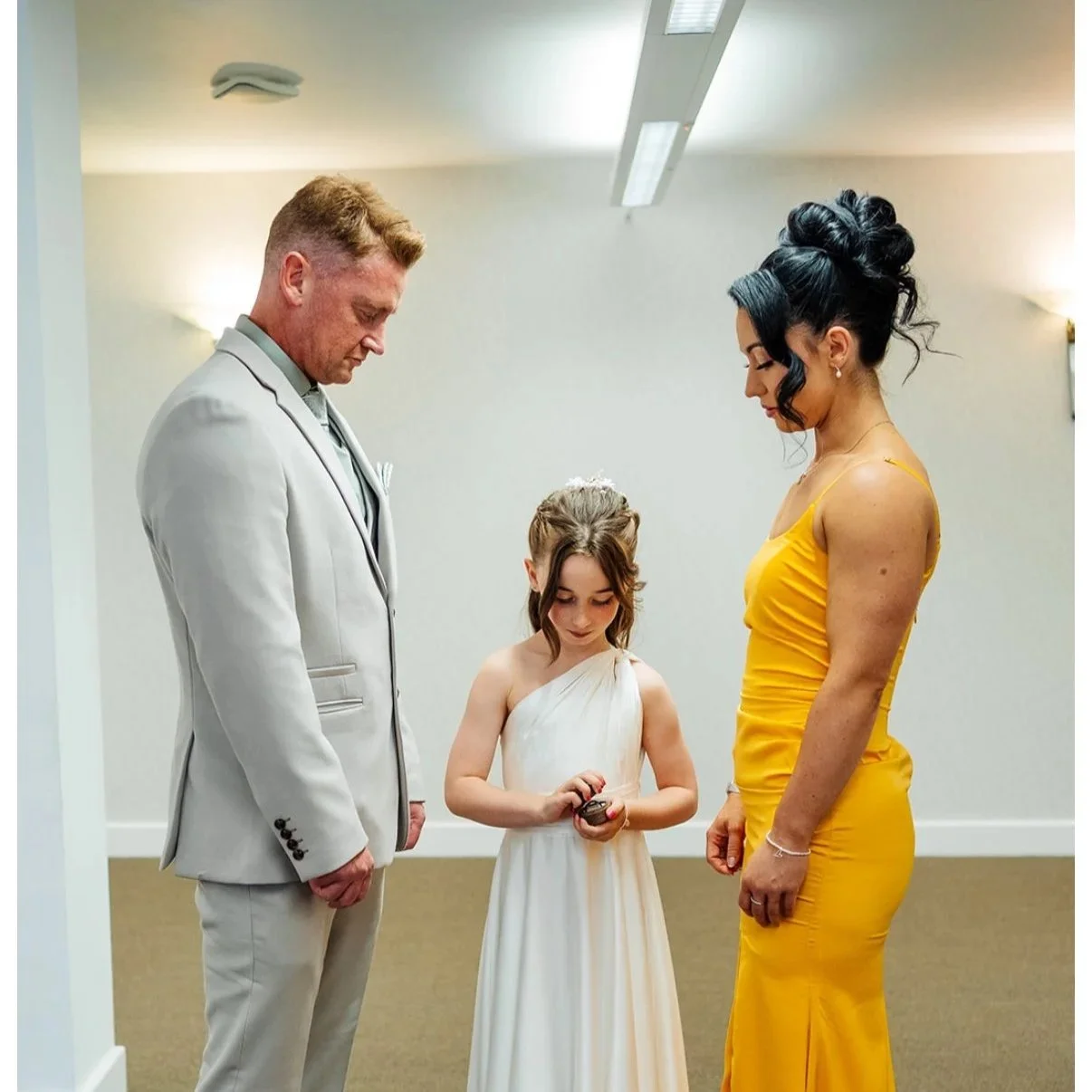
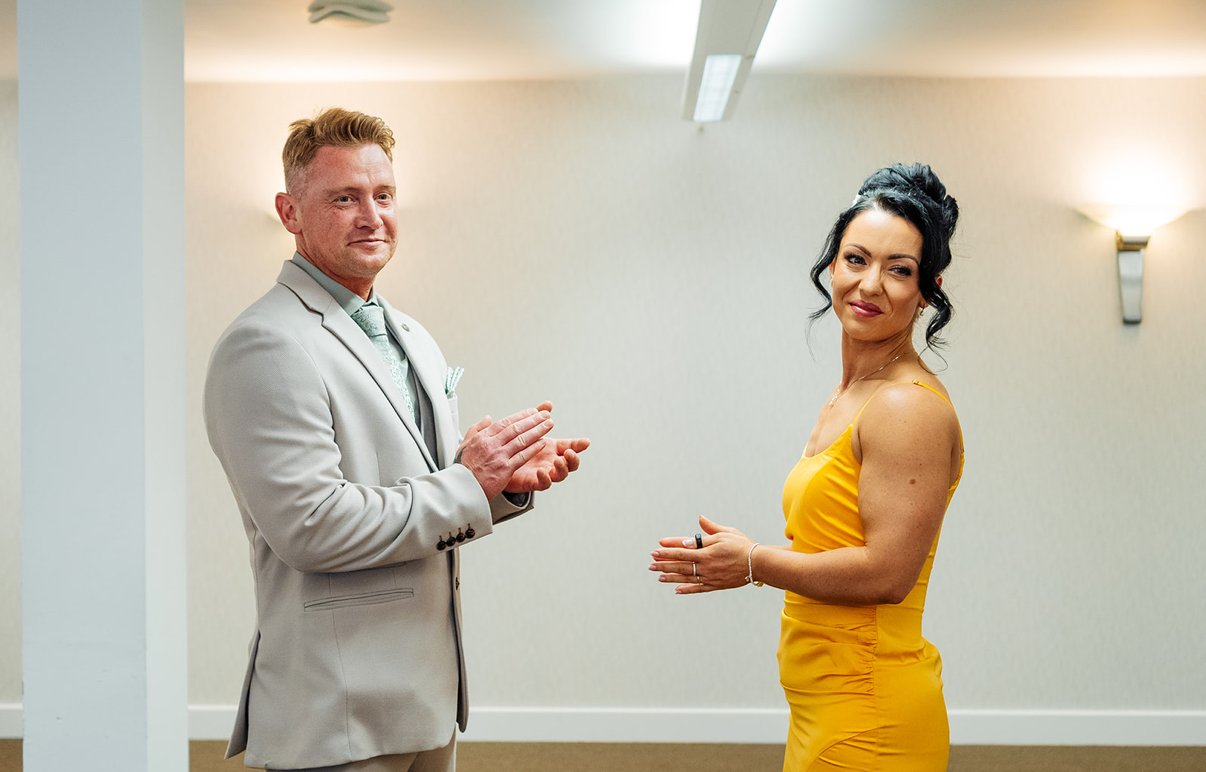
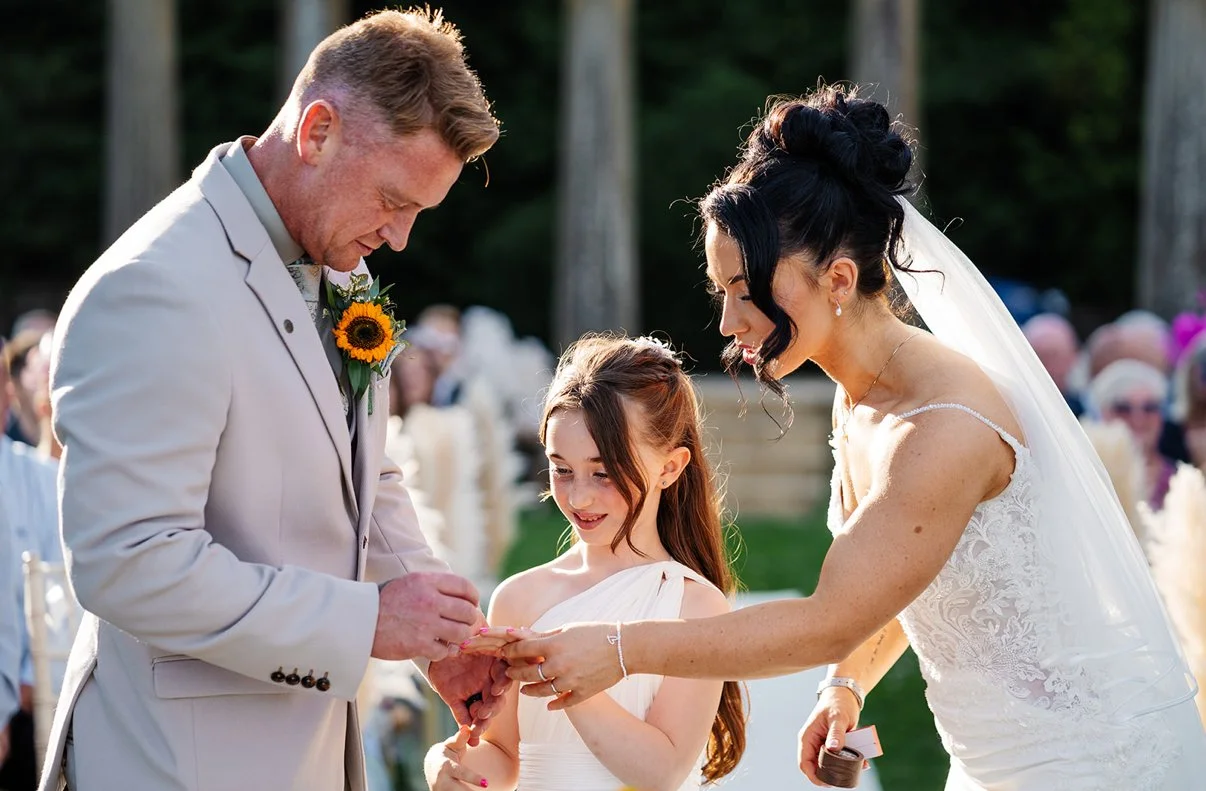
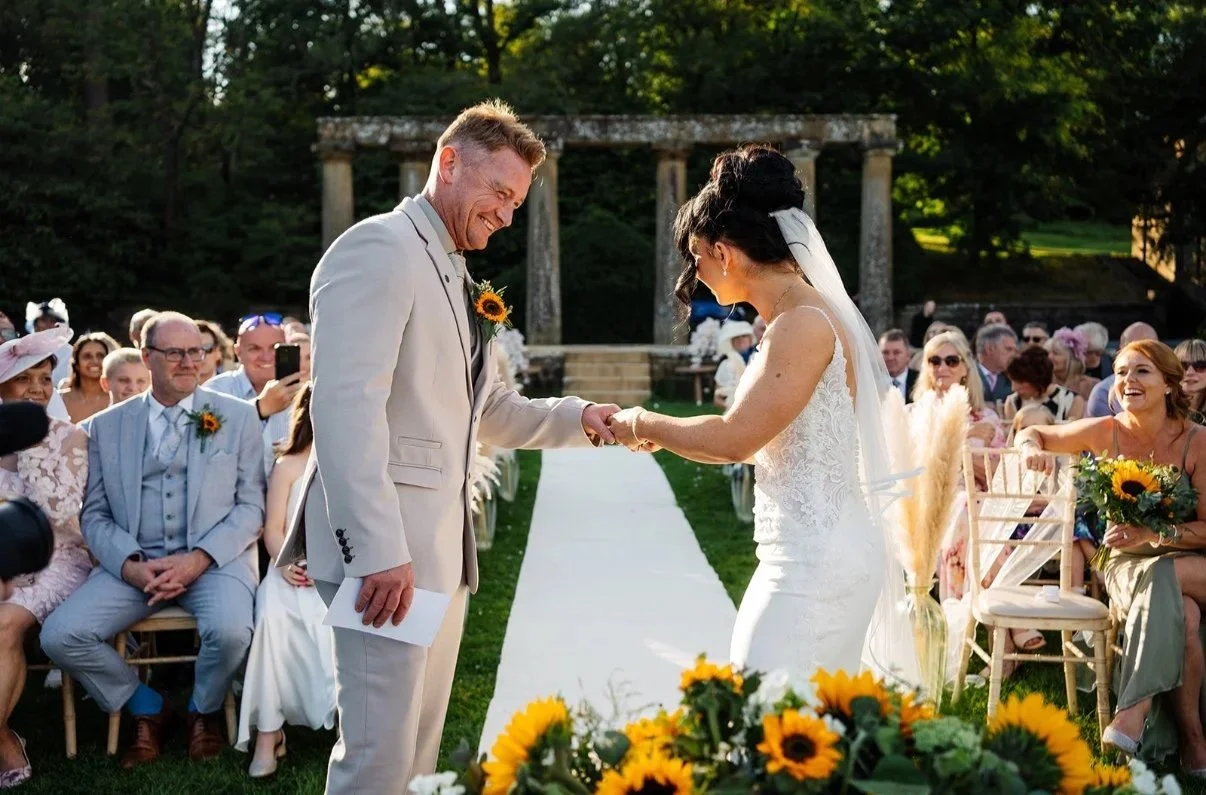
Credit: Georgie Beck Photography for both ceremonies, check out the body language - can you see the energy change?
Can you do both parts on the same day?
Yes, you can, our gorgeous couple pictured above did just that, with the register office at 3pm and their celebrant led ceremony at 6pm read about it. However, wearing my former wedding manager hat, I would advise against booking both on the same day due to the logistics. Running between locations puts immense pressure on hair and makeup timings, transport logistics, and your bridal party's energy levels.
For example, I recently officiated the wedding of this gorgeous couple, they went down to the register office at 3:00 PM to complete the legal bit, followed by a lakeside, twilight, celebrant led ceremony at 6:00 PM. While it was absolutely magnificent, the back-and-forth travel and a second dress-change made the schedule tight for the bridal party.
“Get the legal paperwork out of the way quietly at the beginning of the week (Monday or Tuesday). This keeps stress levels low, saves money, and allows you to enjoy an extended “wedding anniversary week” every single year!”
Everything You Need to Know About the 2+2 Statutory Ceremony
The 2+2 ceremony is the absolute legal minimum marriage framework available in England and Wales. It is a functional, administrative appointment designed to complete the marriage schedule. It currently costs a baseline of £62 (plus the standard £45 fee per person to officially give notice of marriage at your local register office).
What is required for a 2+2 Statutory Ceremony?
The Couple: Both partners must attend in person.
Two Legal Registrars: One official to administer the vows and one to register the details digitally.
Two Witnesses: You must bring two witnesses who are aged 16 or over and can fully understand spoken English. Please note: Register office staff and building staff are legally prohibited from acting as your witnesses. While you can technically ask passers-by or other couples in the building, this is risky. It is always recommended to bring two people, or even a couple of your wedding suppliers (photographer and celebrant).
What is included in the 2+2 process?
Full Legal Names: The couple must clearly state their full legal names.
Declaratory Words: You must state aloud that you know of no legal reason why you cannot be married, choosing from brief, standard legally approved scripts.
Contracting Words: You officially take each other as husband, wife, or legal partner using simple, pre-approved statutory phrasing.
Signing the Schedule: The couple, their two witnesses, and the registrars sign the marriage schedule.
What happens at a 2+2 Statutory Ceremony?
A recent 2+2 statutory ceremony witnessed by Katie (Editor) and her friend Fiona lasted 3 minutes and did not feel remotely wedding-like! The couple chose the shortest possible declaratory and contracting words and simply stated their full names. No rings were exchanged, and no personal vows were spoken, as they chose to save those meaningful moments entirely for Part Two: their celebrant-led ceremony.
Photography and background music were strictly prohibited. We entered the room at 11:59AM and departed at 12:02PM. The couple didn’t receive their certificate of marriage on the day, they were told they would be able to order it online once their marriage had been processed.
We snapped a few photos outside and the newlyweds went to grab a coffee, before going home to walk their dog.
10 Reasons to have a celebrant led wedding
Do not underestimate the immense creative freedom, mental relief, and joy that separating your legal administrative paperwork from your celebrant-led celebration brings to your wedding journey:
You choose the ceremony time: You aren't stuck with an undesirable council slot that forces your hair and makeup team to arrive at 5:00 AM or leaves your guests waiting around for hours before dinner.
You choose the location: You can get married anywhere - licensed venue, unlicensed venue, moors, farm, forest, beach, steam train, boat, sports ground, or even your own garden.
100% Bespoke Ceremony: The ceremony belongs entirely to you. No templates, it’s written completely from scratch, it contains your love story and it sounds and feels like a wedding, but yours!
You choose the music: You can have your music, whether it features explicit lyrics, religious themes, or unconventional melodies. Yes you can have Alex Warren’s Ordinary, or Ruelle’s I get to love you, no issue!
Immersive guest experience: Fun and laughter are warmly encouraged; your friends and family don't have to sit silently in rows, looking terrified.
No strangers: Standing at the front with a celebrant you know and trust calms your nervous system completely, allowing everyone to relax. You won’t feel as anxious, because there are no surprises or strangers, you are in total control.
Better photographs: Your photographer also relaxes, they know your ceremony can breathe, and they have free rein to move around the while space and your capture raw, authentic emotional reactions.
No conveyor belt: Your celebrant is dedicated exclusively to your day, meaning your ceremony is relaxed, paced beautifully, and completely unrushed. They don’t have to get to the next venue to read the same template to a different couple. They are there for you, not for the process.
Blending elements: We can make everyone feel seen and included by incorporating different faiths, spiritual beliefs, modern lifestyles, and unique family backgrounds.
Children and pets: Include your children with a naming ceremony or family vows. You could have your dog act as an official ring bearer, bark to give their blessing and put their inky paw-print on your commemorative certificate!
What Does a Celebrant Actually Do Behind the Scenes?
A professional wedding celebrant does significantly more than simply stand at the front of the aisle on your wedding day and talk for half an hour. The process begins months in advance through relaxed, collaborative planning sessions designed to uncover your love story and your relationship's true dynamic.
Your celebrant will dive deep into your history, learning how you met, your funniest shared memories, the stories your closest friends always tell, your favorite joint activities, what you respect most about each other, your proposal story, and your family dynamics. They use these personal insights to craft an original script from blank page, writing every sentence, story, and transition organically without relying on any standard templates.
What unique elements can you include during a celebrant ceremony?
Because there are no rigid legal rules binding a celebrant-led script, you can build your dream timeline using a mix of traditional, modern, or completely custom rituals:
Personal Vows & Promises: Share your feelings own words without limits or pre-approval. Share them in private, share the in front of your guests, it’s your ceremony.
The Ring Exchange: Exchange wedding rings, or have no rings - it’s your wedding!
Beautiful Unity Rituals: Incorporate historic or modern symbolic acts such as hand-fasting (tying the knot), a ring-warming ceremony, sand blending, or unity candle lighting. You could even have shots, drink whisky from a quaich or have San-San-Kudo sake ritual to represent luck, harmony and completeness.
Surprise Elements: Surprise your guests with surprise ring bearers, tape the ring boxes under random seats, or we could coordinate an interactive full-room singalong to an uplifting song, or primary school banger!
Summary:
Why Modern UK Couples Choose Celebrants
The core answer is incredibly simple: Freedom.
Choosing a celebrant allows you to marry exactly where you want, when you want, to tell your love story authentically, and involve the people who matter most. Laugh, cry happy tears, break outdated traditions, and start meaningful new ones.
Your wedding ceremony shouldn't be a generic, boring box-ticking exercise delivered by a stranger. It shouldn’t be the bit that guests yawn through before the welcome drinks reception. It is the emotional heartbeat of your entire wedding day and it sets the energy and tone for the rest of the day.
Long after the music fades, your guests won't remember the exact color of your chair sashes and if they matched the napkins, but they will always remember exactly how they felt during your celebrant-led ceremony.
And that moment deserves to feel absolutely unforgettable.
Katie x
Founder & Editor, Celebrant Led
Former Wedding Manager | Wedding Celebrant | Wedding Industry Commentator